

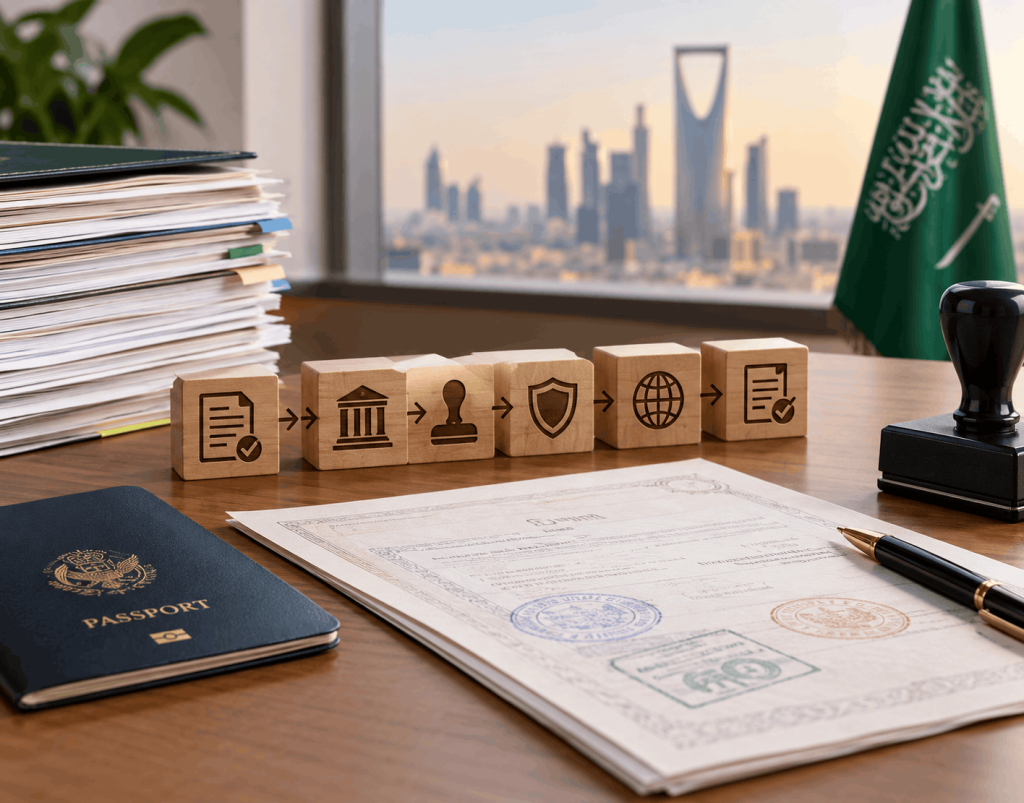
A document can be genuine and correctly issued by the original authority, yet still cause delays or rejection during Saudi legalisation. The problem is rarely the document itself. It is usually a break in the required authentication chain, a mismatch in details, or a missed intermediate step. Requirements can also differ by document type: educational certificates often need extra verification steps that civil or commercial documents do not.
The Legalisation Chain Must Be Complete and in Order
Saudi authorities accept foreign documents only after they have passed through a specific sequence of verifications. Each authority checks the stamp of the one before it. If any step is skipped or done out of order, the next authority rejects the file.
For many countries the route now includes an apostille. For others the full embassy legalisation path is still required. Educational certificates frequently need an additional verification step, such as Saudi Cultural Attaché or Mosadaqa, even when the rest of the chain is complete. Missing that extra step is one of the most common reasons a seemingly correct degree is returned.
Name and Detail Mismatches
The name, date of birth and other personal details on the document must match the passport exactly. Small differences in spelling, order of names, or missing middle names regularly trigger rejection. Even a correctly issued certificate can be held if the details do not align with the passport data already in the visa or Qiwa system.
Translation Problems
A certified Arabic translation is often required. The translation must be attached to the original attested document. Translating the document first and then trying to legalise only the translation, or using a non-certified translator, frequently causes the file to be rejected.
Physical Condition and Age of the Document
Illegible stamps, damaged pages, or certificates that appear altered can stop the process. Some older documents may also require re-verification by the issuing authority before they are accepted for legalisation.
University or Issuing Authority Verification Delays
For educational documents, Saudi systems sometimes contact the issuing university directly, for example through Mosadaqa. If the university is slow to respond or the request goes to the wrong office, the file can sit in “awaiting response” status for weeks. This is outside the applicant’s control but still blocks progress.
What to Do If a Document Is Already Rejected
Do not restart the entire chain from the beginning. Identify the exact missing or incorrect step, correct only that part, and resubmit. Restarting everything unnecessarily adds weeks of delay.
How to Reduce the Risk of Delay
- Confirm the exact current route for your country and document type before starting.
- Ensure every required intermediate stamp is present and in the correct sequence.
- Check that names and personal details match the passport exactly.
- Use a certified translator and keep the translation attached to the original.
- Start the process early so there is time to correct any issues that appear.
A properly issued document is only the starting point. Saudi legalisation depends on the complete and correct chain of verification. When any link is missing or unclear, delays follow even though the original document itself is genuine.
Need Help With Document Legalisation?
Clear preparation of the authentication chain prevents most avoidable delays. Tasheera Services assists applicants and employers with practical guidance on document legalisation for Saudi processes. Contact our team if you need support.